
How to Tell If a Pokémon Card Is Real or Fake: A Practical Guide
For collectors and players, few things are more disappointing than discovering a treasured card is counterfeit. With the Pokémon TCG market more active than ever—and high-profile counterfeit schemes making headlines—knowing how to authenticate cards has become an essential skill. The good news is that most fakes can be identified with a few simple tests. Here’s what to look for.
Table of Contents
Why Authentication Matters Now More Than Ever
Counterfeit Pokémon cards are more common—and more convincing—than ever. Five years ago, most fakes were obvious: wrong colors, bad fonts, flimsy cardstock. Today, some counterfeits are good enough to fool casual collectors at a glance, and there have even been instances of fakes submitted to professional grading companies.
Recent incidents underscore the scale of the problem. In January 2026, a fraudster was convicted for selling Pokémon and sports cards with fake PSA grading labels, including 1999 Venusaur and Charizard cards worth approximately $2 million. Another scandal involving CGC led to the recall of over 1,500 Pokémon cards amid investigations into potentially counterfeit prototype cards.
The message is clear: learning to authenticate cards yourself is essential for protecting your collection and your wallet.
The Light Test: The Most Reliable Quick Check
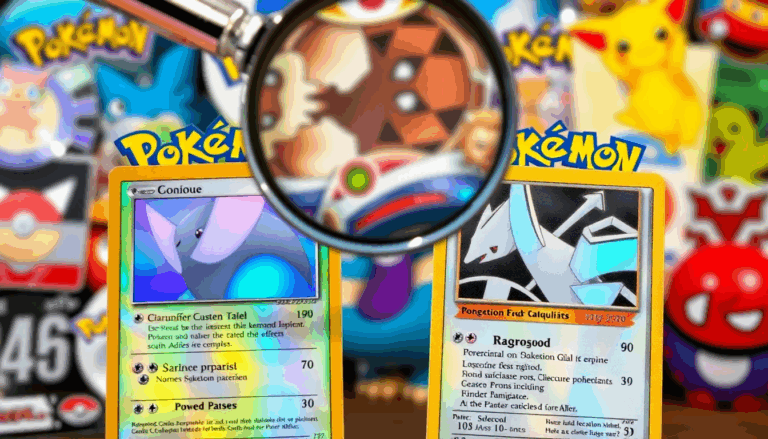
The light test is widely considered the single most effective non-destructive method for identifying fake Pokémon cards. It exploits a fundamental difference in how real and fake cards are constructed.
How to do it:
-
Use a bright light source—a phone flashlight works perfectly
-
Hold the card between you and the light
-
Shine the light directly through the card from behind
-
Observe how the light passes through
What a real card looks like:
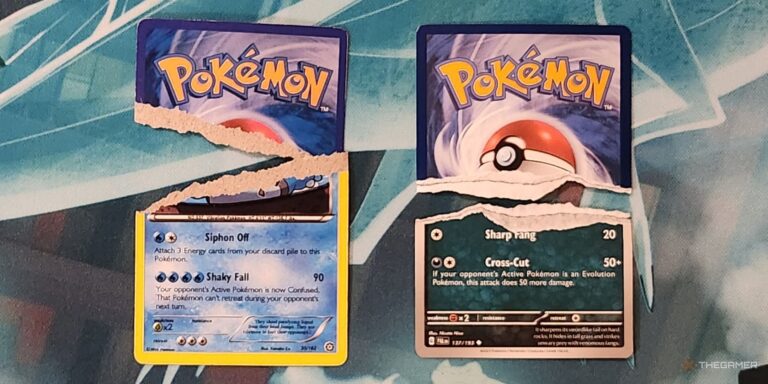
Real Pokémon cards have a thin black or blue core layer sandwiched between the front and back printing layers. When you shine a light through a real card, you will see a dark, muted glow. The light appears dim and may have a slight blue or purple tint. Some light passes through, but it is heavily filtered by that opaque core layer.
What a fake card looks like:
Most counterfeit cards lack the black core layer entirely. When you shine a light through them, the light passes through much more brightly. You can often see the artwork from the other side of the card clearly. The card appears almost translucent compared to a real one.
This test catches the vast majority of fakes because reproducing the multi-layer card construction is significantly more expensive than what most counterfeiters are willing to invest.
Limitation: The light test does not work well on holographic cards because the foil layer blocks light regardless of authenticity. For holos, rely on other methods.
The Feel Test: Texture and Cardstock Quality
Authentic Pokémon cards have a specific feel that becomes recognizable with practice. This test is subjective but highly reliable once you are familiar with genuine cards.
What a real card feels like:
Real Pokémon cards have a consistent stiffness and texture. The cardstock is firm but slightly flexible, with a smooth (but not glossy-smooth) matte finish on non-holographic areas. If you bend a real card slightly—without creasing it—it has a specific resistance and springback. Modern cards (Scarlet & Violet era) are slightly thinner and smoother than vintage cards, but within each era, all authentic cards have a consistent feel.
The surface has a subtle micro-texture that resists fingerprints and provides a premium hand feel. Run your fingertip across the surface—authentic cards have a uniform, slightly grainy matte texture.
What a fake card feels like:
Counterfeit cards typically fall into two categories:
-
Too thin and flimsy: Like regular printer paper or thin cardstock. They bend too easily and do not spring back.
-
Too thick and stiff: Excessively rigid with no natural flexibility.
-
Wrong surface texture: Fakes often feel either too slick (like cheap plastic) or overly matte and chalky.
The edges of genuine cards are die-cut with precision—cleanly cut with no fraying or roughness. Fakes often show uneven cuts, slight warping, or a fuzzy edge where the laminate separates.
Font and Text: Spotting the Details That Matter
Typography is one of the most reliable visual indicators of authenticity. The Pokémon Company uses precise, proprietary fonts across all card elements—from the Pokémon name to attack labels and flavor text. Counterfeiters often substitute similar-looking fonts from public libraries, introducing subtle but detectable discrepancies.
What to check:
| Element | What Authentic Looks Like | What Fakes Look Like |
| Pokémon name | Evenly spaced, sharp corners, uniform stroke thickness | Stretched, compressed, or pixelated letters |
| Attack names and damage | Clean, consistent Pokemon Hollow font | Irregular outlines, jagged lines, gaps where strokes don’t connect |
| HP designation | Crisp, correct font | Blurry, wrong thickness, or incorrect formatting |
| Card effect text | Sharp, properly aligned | Blurred, misaligned, or inconsistent shading |
The letter “P” in the Pokémon name should have a perfectly rounded bowl and a straight vertical stem—distortions here are a strong indicator of forgery. Attack names and damage values use Pokemon Hollow, a sans-serif outline font. On real cards, the lines are clean and consistent. On counterfeits, these outlines may vary in thickness, appear jagged, or have gaps where strokes do not connect properly.
Spelling errors: Perhaps the most obvious tell is a spelling mistake. Look for errors like “Pikatchu” instead of “Pikachu” or other misspellings in the card text.
The Card Back: A Simple Visual Check
The back of a Pokémon card is often the easiest place to spot a fake. The design has remained largely consistent across decades, making it a useful reference point.
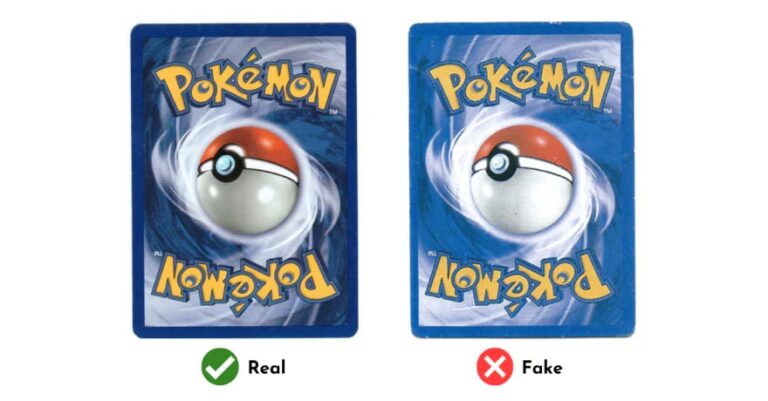
What authentic looks like:
-
A sharp blue gradient, not flat or uniform
-
A crisp Poké Ball emblem that is perfectly centered
-
Clear, sharp lettering
-
The “Pokémon” logo appears in metallic gold, while the rest of the back has a matte surface similar to paper cards
What fakes look like:
-
Flat or uniform blue color, lacking the gradient
-
Blurry or off-center Poké Ball logo
-
Washed-out or overly bright colors
-
The entire back may have a metallic or chrome finish instead of just the logo
Place both cards side by side under natural light. Any differences in hue or print clarity are warning signs.
Holographic Patterns: What Genuine Holos Should Look Like
Holographic (holo) cards require special attention because the light test does not work well on them. However, the holographic pattern itself is a reliable indicator.
What authentic holo looks like:
-
Genuine holo cards have a dynamic pattern that shifts when the card is tilted
-
The foil is integrated into the card’s texture, not simply printed on top
-
On first-edition holographic rares, the foil creates a rainbow-like shimmer that shifts with movement
-
The pattern follows a strict design template unique to each set and era
What fake holo looks like:
-
The shine may be less vibrant or noticeable than on genuine cards
-
Fake holo patterns are often flat and do not shift convincingly when tilted
-
Some fakes reuse holo textures stolen from TCGplayer scans rather than using authentic foil
-
The foil may appear as a simple shiny coating rather than an integrated layer
Run your finger across a holo card. On authentic cards, the foil is embedded into the card’s construction. On many fakes, the shiny surface feels like a sticker applied on top and may peel or scratch easily.
Print Resolution and Edge Quality
Most fake cards have reduced print resolution or quality issues. These are usually seen in the form of faded or unclear colors. Card illustrations might also be printed unevenly.
What to check:
-
Text clarity: The text should be razor-sharp, not blurry or pixelated
-
Color accuracy: Colors should be vibrant and accurate, not faded or oversaturated
-
Border lines: The yellow border should be a pure, consistent color without visible printing dots or patterns
-
Edges: Genuine cards have clean, sharp cuts. Fakes may have rough or fuzzy edges
For minor print quality issues, a microscope may be needed to see the difference. Professional authentication services include microscope testing as part of their process.
What to Watch For When Buying Online
Knowing how to authenticate cards in hand is essential, but preventing counterfeit purchases starts before you buy.
Red flags in listings:
-
Prices that seem too good to be true—significantly below market value
-
Stock photos instead of photos of the actual card
-
Vague condition descriptions with no mention of wear
-
Sellers with low ratings or no transaction history
-
Listings for pre-orders of high-demand sets from unofficial sources—pre-order scams have become increasingly common
Safe practices:
-
Request additional photos if the listing is unclear. Ask for pictures of the card back, the holo pattern at different angles, and close-ups of text.
-
Check seller ratings carefully. On platforms like Mercari and Rakuma, look for sellers with 98% or higher positive ratings and a history of card sales.
-
For high-value cards, consider using a third-party authentication service.
-
When possible, compare the card to a known authentic example from the same set.
How to Purchase Japanese Pokémon Cards with Rakufun
Many Japanese Pokémon cards are available through domestic marketplaces that do not ship internationally. Rakufun is a proxy shopping platform that bridges this gap. Available as both a website and a mobile app, it connects you with Japanese marketplaces and stores, handling domestic purchases and international shipping. The platform charges 0% purchasing fees—you pay only for items and shipping.
Step 1: Find Your Cards
You have two ways to search:
-
Direct Search: Use Rakufun’s built-in search to browse items from partnered platforms like Mercari, JDirectItems Auction(Yahoo Auctions), Rakuma, and Surugaya. Search by card name, set, or Japanese keywords.
-
Link2Buy Method: If you find a Pokémon card on a Japanese website that does not ship internationally—copy the product URL and paste it into Rakufun’s Link2Buy tool. The system will populate product details, allowing you to confirm price and specifications before ordering.
Step 2: Place Your Order and Request Photo Verification
Add the card to your cart and proceed to checkout. For high-value cards, you can use Rakufun’s photo verification service to request additional photographs from the seller before the purchase is finalized. This allows you to see the actual card—including the front, back, edges, and any imperfections—rather than relying solely on listing images. Simply add your request in the notes field when placing the order. The Rakufun team will contact the seller on your behalf, obtain the requested photos, and share them with you.
This service is particularly valuable for vintage cards, rare holographic cards, or any purchase where condition is critical.
Step 3: Consolidate Multiple Items
If you are purchasing from multiple sellers or adding other items to your shipment, take advantage of 90-days free warehouse storage. Rakufun holds your items at their domestic warehouse in Japan. Once everything arrives, you can combine them into one shipment. This reduces international shipping costs compared to sending items individually.
Step 4: Choose Shipping and Receive
Select your preferred international shipping method—economical sea mail for larger orders or express services like DHL or EMS for faster delivery. Rakufun professionally repacks your items to ensure they are secure for the journey. You can track your package all the way to your doorstep.
Final Thoughts
Authenticating Pokémon cards does not require special equipment or years of experience. The light test, feel test, font inspection, and card back check are accessible to anyone. Once you know what to look for, spotting fakes becomes second nature.
The most important rule remains the simplest: if a deal seems too good to be true, it probably is. Counterfeiters rely on buyers who are in a hurry or who want to believe they have found a bargain. Taking a few extra minutes to examine a card—or to research a seller—can save significant frustration and expense.
For collectors seeking Japanese Pokémon cards, Rakufun provides a straightforward way to access the Japanese market safely. The platform’s direct search and Link2Buy features allow you to purchase from Japanese sellers with confidence. The optional photo verification service adds an extra layer of security for high-value purchases, helping you confirm authenticity and condition before committing to international shipping.
Have you encountered a counterfeit Pokémon card? What tests have you found most useful? Sharing your experiences helps others protect their collections as well.
Rakufun simplifies Japanese proxy shopping and global shipping, your all-in-one app for a seamless, fee-free experience:https://blog.rakufun.com/how-to-tell-if-a-pokemon-card-is-real-or-fake-a-practical-guide/